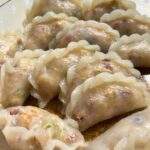
Gok Jai: Savory Steamed Chicken Dumplings, a Nut-Free Dim Sum Recipe
Servings: 55 dumplings
Calories: 70kcal
Cost: $20
This steamed savory dim sum recipe is a traditional Cantonese recipe that my Zhongshan Longdu family makes. I've adapted it slightly by using ground chicken instead of pork and use a leaner type of Chinese sausage. This type of steamed savory gok jai recipe is a naturally nut-free dim sum recipe. This recipe is rather advanced and I recommend reading through the recipe and the accompanying post before starting.
Print Recipe
Equipment
- 1 large steamer pot
- 1 steamer rack (or aluminum foil ring)
- 4 pie plates and/or 9 inch round cake pans
- 1 water kettle or medium-sized pot
- 1 medium sized mixing bowl
- 1 large frying pan
- 1 large bowl
- 1 large mixing bowl with lid (or dinner plate) or a large pot with lid
- 1 glass measuring cup (1 cup or larger)
- 1 tortilla press or rolling pin
- parchment paper (or wax paper)
Ingredients
Filling Ingredients
- 1 pound ground chicken or ground pork
- 1 teaspoon oyster sauce
- 1 teaspoon soy sauce
- 1/2 teaspoon ground white pepper or freshly ground black pepper
- 1/2 teaspoon sugar
- 1 teaspoon sesame oil optional
- 2 teaspoons cornstarch
- 2 links chicken-pork lop cheong (Chinese sausage)
- 2 ounces dried shrimp small-sized
- 3/4 pound jicama peeled and finely diced (1.5 cups)
- 1/2 large red onion finely diced (1 cup), or sweet onions
- 4 stalks scallion finely chopped (1/2 cup)
- 2 teaspoons olive oil divided
- 1 teaspoon sugar divided
- 1 teaspoon soy sauce divided
Cornstarch Slurry
- 1 teaspoon oyster sauce
- 1 teaspoon soy sauce
- 2 teaspoons sesame oil optional
- 2 teaspoons cornstarch
- 2 tablespoons water
Wrapper Ingredients
- 1 pound wheat starch approximately 3.25 cups
- 3/4 cup tapioca starch
- 1/2 teaspoon salt
- 4.5 cups water boiling hot
- 2 tablespoons olive oil divided
- 1/4 cup tapioca starch, wheat starch, or cornstarch for dusting work surfaces and fingers as needed
Instructions
- Set up a large, wide pot to steam the dumplings by adding a steam rack. Check that your pie plates and/or cake pans will fit inside the pot with the lid on and allow at least 1/2 inch of clearance around the sides and over the the filled pie plates/under the lid. Then filling the pot with water up to the level of the steam rack, do not turn on the heat until you're ready to knead the dough and assemble.
- Fill a water kettle or a second medium-sized pot with water and cook on low heat. You will need at least 5 cups of water to make the hot water dough and more later to add hot water to the steamer pot everytime you steam another pie plate of gok jai. Bring to a boil when you are ready to make the hot water dough.
Filling prep instructions:
- Marinate the ground chicken: place all of the ground chicken in a medium-sized mixing bowl and add 1 teaspoon oyster sauce, 1 teaspoon soy sauce, 1/2 teaspoon ground white pepper, 1/2 teaspoon sugar, and 1 teaspoon sesame oil (if using), then stir with a fork or chopsticks until combined. Add 2 teaspoons cornstarch and stir until combined. Set aside in the refrigerator to marinate for 15-30 minutes, or until ready to stir-fry.
- Fine chop the sausage: cut the sausages in half lengthwise, cut each half into quarters, and then slice the sausage quarters into 1/8 inch thickness. Transfer to a medium sized bowl and set aside.
- Soak the dried shrimp: Rinse the dried shrimp in a small bowl and drain the water. Add water again and soak the dried shrimp for 2 minutes. Drain the water and set aside. If using medium or large dried shrimp, transfer the rehydrated shrimp to a cutting board and rough chop the shrimp so that they're no more than 1/4 inch in size. Transfer to the small bowl and set aside.
- Fine dice the red onion: peel the onion, trim and discard the root end. Cut the onion into 1/8 inch slices and then fine dice. Transfer to a small bowl and set aside.
- Fine dice the jicama: use a paring knife or peeler to peel the jicama and trim off any fibrous areas. Thinly slice the jicama, cut the slices into thin sticks, and then fine dice the sticks into small cubes (approximately 1/8 inch) and set aside in a medium sized bowl.
- Combine the cornstarch slurry ingredients (1 teaspoon oyster sauce, 1 teaspoon soy sauce, 2 teaspoons sesame oil, if using, 2 teaspoons cornstarch, and 2 tablespoons water) in a small bowl, set aside.
Make the Hot Wheat Starch Dough.
- At this point, turn up the heat on the kettle so that you will have boiling hot water ready.
- You will need a large heat-safe mixing bowl and a lid or dinner plate that can fit over it. Or you can use a 5-6 quart pot with a lid. Add a bag of wheat starch, 3/4 cup tapioca starch, and 1/2 teaspoon salt and use a large spoon or whisk to combine.
- Make the hot water dough: pour the boiling water into the starch while stirring at the same time. It's important to take your time to do this safely without distractions and to keep any children, pets, or vulnerable family members away. Transfer the boiling water into a glass measuring cup with a pour spot and drizzle 1 cup of hot water around the starch mixture and stir with chopsticks or a wooden spoon. Continue adding hot water, 1 cup at a time (4.5 cups total) and stirring until the starch mixture and water are combined. Use a rounded dough scraper to scrape the bowl and incorporate any dry starch at the bottom of the bowl, add 1-2 tablespoons of hot water as needed. The dough will appear rough and shaggy. Cover with a lid or a large plate for 20 minutes, or until warm to touch.
- Refill your hot water pot or kettle with water and cook on low heat until you are ready to steam the plates of assembled gok jai and need to add more hot water as necessary.
Stir-Fry the Filling Ingredients
- Stir-fry lop cheung and dried shrimp. In a large non-stick frying pan, add the chopped lop cheung into a cold pan and cook on low-medium heat for 3-4 minutes. As the pan heats up, the lop cheung will start rendering some fat, then increase the heat to medium, add the dried shrimp and stir-fry the lop cheung and shrimp (30 seconds). Push some of the mixture aside and add 1/2 teaspoon of sugar and allow the sugar to melt (30 seconds). When the sugar starts to melt, stir the sausage pieces into the melted sugar, add 1/2 teaspoon soy sauce and continue to stir fry the shrimp and lop cheung until they're evenly seasoned (30 seconds). Remove from heat and transfer to a clean large bowl, set aside.
- Stir-fry onions and jicama. In the same frying pan with medium heat, add 1 teaspoon olive oil and the diced onions (add diced mushrooms here, if using). Stir fry until the diced onions are fragrant (30 seconds). Add the diced jicama and stir fry to combine. Push some of the mixture aside and add 1/2 teaspoon of sugar and allow the sugar to start to melt (30 seconds). When the sugar starts to melt, stir the vegetables into the sugar, add 1/2 teaspoon soy sauce and stir-fry to combine until everything is seasoned and the jicama looks cooked (1-2 minutes). Remove from heat and transfer to the bowl with the sausage and shrimp, set aside.
- Stir-fry the ground chicken. In the same frying pan with medium heat, add 1 teaspoon olive oil and the ground chicken. Spread the chicken mixture out to brown and use a spatula to break up the chicken into pea-sized pieces until not pink and cooked through (5 to 7 minutes).
- Combine all the filling ingredients and add the cornstarch slurry. Return the already stir-fried lop cheung, dried shrimp, jicama and onions back into the pan, briefly stir-fry for 1 minute until hot. Stir the cornstarch slurry until it's smooth, then pour it into the pan then stir fry to combine until the sauce thickens and turn off the heat.
- Check that the filling is seasoned to taste: At this point, I check that the filling is seasoned to my liking (it usually is). For example you can add a little more white pepper, more sesame oil if using, oyster sauce for more umami and/or sweetness, or the smallest amount of soy sauce. Once seasoned to your liking, add the chopped scallions and stir to combine and transfer the filling mixture back into the large bowl.
Dumpling Assembly and Steaming Instructions
- Final preparations before assembling dumplings. If you have a tortilla press, line both sides of it with parchment paper (I secure parchment paper on the top side with a chip clip or clothespin). Otherwise you can use parchment paper and a rolling pin, set aside. Brush 4 pie plates or cake pans with a little bit of oil or coat with non-stick spray, set aside. Check that your steamer has enough hot water, cook on low heat until you have your first plate of assembled dumplings.
- Precautions for handling the hot water dough. After allowing the hot water dough to rest in a heat-safe covered bowl or pot for 20 minutes or so, pinch it with your finger tips to check that it's not too hot to knead. If you have a digital thermometer you can check and if it's hotter than 110°F, cover up the dough and wait 5 more minutes and check again. I recommend wearing food-safe prep gloves because if the dough is too hot to knead, you can easily take the gloves off instead of having hot dough stuck to your hand. When in doubt, I wear a nitrile gloves over a kitchen glove to protect my hand, I usually can tolerate the heat this way. Don't wait too long (up to 40 minutes) because the dough is easier to handle while still warm and it's best to keep it covered so dough doesn't dry out and crack.
- Knead the dough. When you decide that the dough has cooled down enough to handle, pour 2 tablespoons of oil over the hot water dough and knead the dough until it is smooth and no longer lumpy. As you knead, break up any white lumps of starch by squeezing them between your thumb and fingers. When the dough is smooth, roughly divide the dough into 4 quarters, take out one quarter, and cover the bowl.
- Divide the quarter into dough balls. Work on a clean cutting board and lightly dust with tapioca starch or cornstarch. Knead the dough a few times so that the dough is smooth and not too sticky. Roll the dough into a 1-inch thick log and cut into approximately 12 to 15 1-inch pieces. Each piece should weigh approximately 25 grams. If you don't have a small scale, try to be consistent (like the size of a cherry tomato). Roll each piece into a ball, place them on one of your pie plates or on the plate that's covering the bowl of dough. If you're working by yourself, keep the dough balls covered with a sheet of parchment paper or plastic wrap so they don't dry out.
- Flatten a ball into a 3.5 inch circle, about 1/8-inch thick with a tortilla press or rolling pin. If you don't have either, press the dough ball with the heel of your palm into a cookie shape, then hold it in both hands and start pinching and flattening it out from the center into a circle (flat or cup shaped).
- Fill the dough circle. Hold the dough circle in your slightly cupped hand and add a tablespoon of filling. Tap the filling down, add a tiny more if there's space or take a little bit out if it seems overfilled. Allow at least 1/2-inch margin around the edge so that there's room to pinch the edges of the wrapper together.
- To seal the dumpling wrapper, you're already holding the wrapper and filling like a taco in your cupped hand. Pinch the tops of the circle together and then keep pinching down each side to seal the dumpling.
- To add the decorative rope edge, start from one end of the dumpling edge, use the side of your thumb to press the edge down diagonally and pinch. Move your thumb slightly over and pinch again until the dumpling looks like an empanada. Place the filled and sealed dumpling upright in your lightly oiled pie plate. Repeat the filling and sealing process until you fill a pie plate with gok jai.
- Check the steamer pot: When your plate is almost full, bring your steamer pot to a full boil on medium heat. Check that the level of water reaches your steamer rack (at least 1-inch high) and add more hot water as needed. Be sure you have extra water in a pot or a kettle to add to the steamer pot in between batches of gok jai.
- Steam the dumplings: Place about 12-14 gok jai per plate, arrange the dumplings so that they're slightly staggered and not too crowded so that the wrapper cooks thoroughly. Carefully place the plate of dumplings on top of the steamer rack and cover with the lid. Steam each plate of dumplings for 15 minutes, set a timer.
- When the dumplings are done steaming after 15 minutes, carefully lift the lid so that the condensation drips back into the pot and not into the plate of dumplings (quickly lift the lid and aim the edge of your lid in between the outside edge of the plate and the pot). The dumplings are ready when the wrappers look slightly translucent (you can see the filling inside). Use a plate lifter (or other heat protective gloves) to take the pie plate out and then refill the steamer pot with hot water up to the height of the steamer rack. Add the next plate of gok jai to steam for 15 minutes and repeat until all the gok jai dumplings are steamed.
- The gok jai are ready to serve and eat as-is, while hot and steamy. If you prefer, you can lightly dip them with typical dim sum sauces such as soy sauce and/or chili oil but I recommend trying them plain to savor all the subtle flavors and textures.
Notes
If using shiitake mushroom: remove the stems from 5 dried shiitake mushrooms and rinse with water. Then soak the mushrooms in just enough fresh water to cover them, until they're soft and pliable (allow 1 hour or soak overnight refrigerated). Squeeze the water out and then thinly slice, and cut the slices into small dice. Add them to the filling stir fry along with the dried shrimp with 1/2 teaspoon oil as needed.
*If you do not have 4 pie plates and/or 9-in round cake pans, you can make do with at least 1 or 2 of them. Allow the freshly steamed plate of dumplings to cool down for 10-15 minutes and then you can transfer them to a serving platter. This way you can free up a pie plate to steam the rest of your assembled dumplings.
Nutrition facts are automatically calculated and are considered an estimate.
Nutrition
Serving: 1gok jai | Calories: 70kcal | Carbohydrates: 11g | Protein: 3g | Fat: 2g | Saturated Fat: 0.4g | Polyunsaturated Fat: 0.3g | Monounsaturated Fat: 1g | Trans Fat: 0.01g | Cholesterol: 20mg | Sodium: 102mg | Potassium: 58mg | Fiber: 0.4g | Sugar: 0.3g | Vitamin A: 10IU | Vitamin C: 1mg | Calcium: 8mg | Iron: 0.3mg