
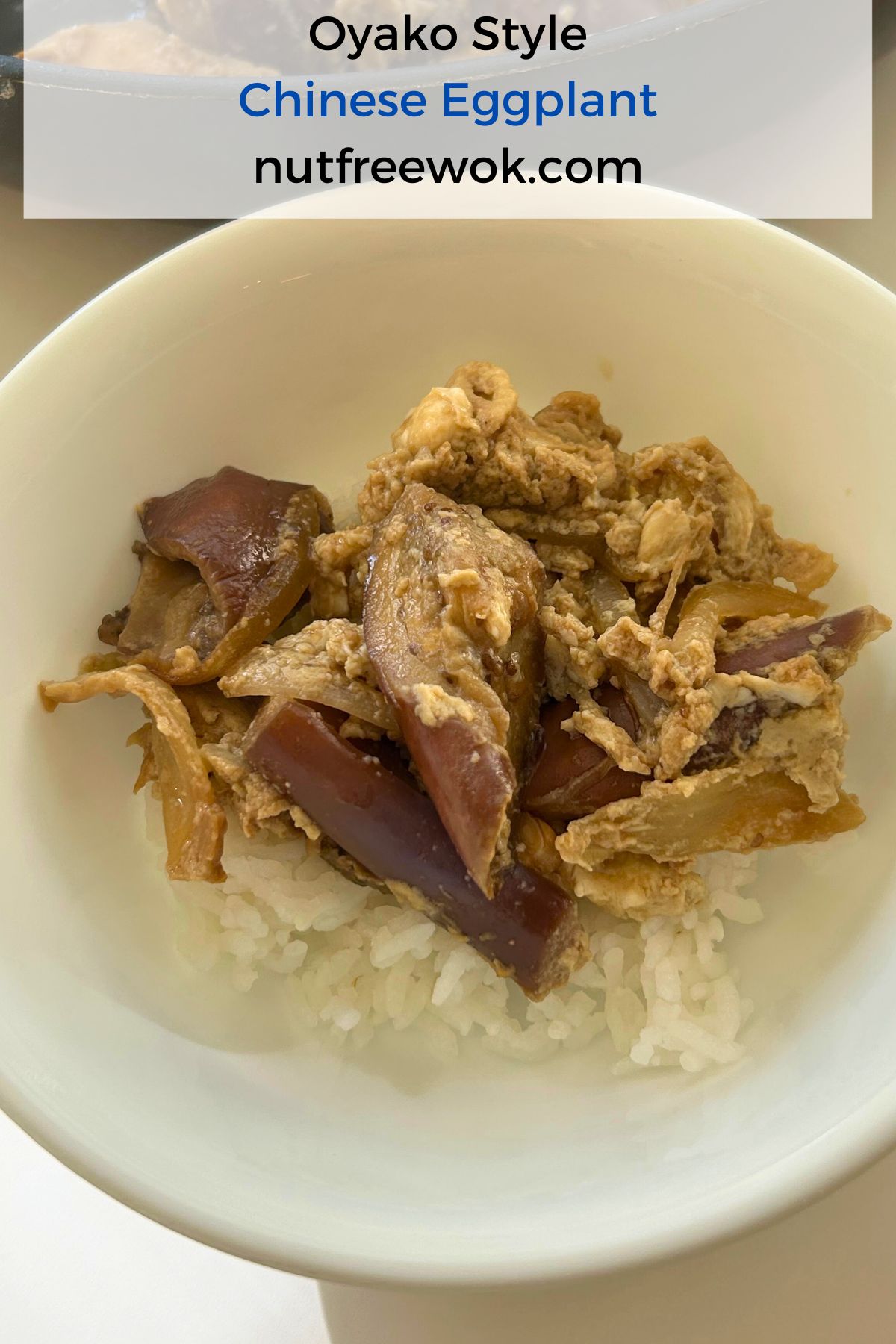
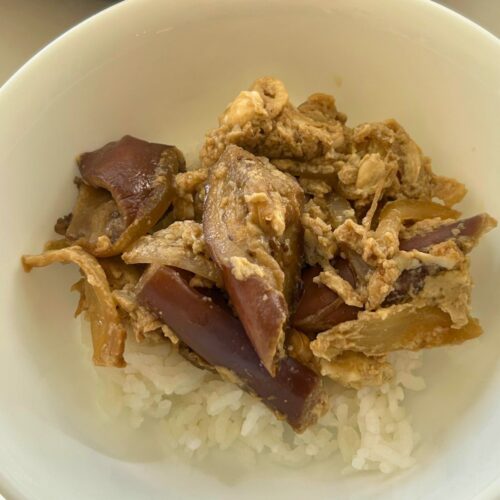
I cooked some Chinese eggplant with sliced onions, soy sauce, and mirin until tender, and then add some beaten eggs and cooked until set, and served over a bowl of freshly cooked rice, oyako-style. I was inspired when I made oyako donburi, a Japanese inspired chicken and egg over rice bowl, and decided to cook the Chinese eggplant oyako style.
Disclaimer: Please check that all ingredients are suitable for your allergies and be sure to ask your medical care team regarding any allergy related questions (I do not share medical advice). As an Amazon Associate, I earn from qualifying purchases.
What are Chinese Eggplants?
Chinese eggplant have a light purple colored skin and are long and narrow in shape. They have fewer seeds and are less bitter compared to Italian eggplant. Even though eggplant is a summer crop, you can find them throughout the year at Asian markets.
They have a thinner skin and fewer seeds compared to the more bulbous shaped Italian eggplant you find in conventional supermarkets. They’re typically pan-fried with oil to make dishes such as eggplant stuffed with fish paste or a spicy eggplant stir fry.
I usually like braising them in a broth-like sauce for a lighter dish such as garlic eggplant or with some black bean sauce for a little bit more flavor. I don’t love the idea of spending 15-20 minutes to cook a plain-ish vegetable dish but it’s super easy in an Instant Pot (included in my cookbook). However, I can feel excited about cooking eggplant that has more flavor and nutrients simply by adding eggs and onions.
What are Oyako-Style Japanese Egg and Rice Bowls?
Whenever I want some comfort food, I think about all the Japanese rice bowl options. Generally they’re chicken, beef, pork, or tofu simmered with a dashi, soy, and mirin sauce until nearly cooked through and then add some beaten eggs and simmered until set but still soft. The cooked meat, onion, and egg is served over a large bowl of rice with the soup-like sauce.
Shop for Chinese Eggplant
Chinese eggplants are available all year at Asian supermarkets. They peak during the summer months and you can find them at your local farmers’ markets in the summer.
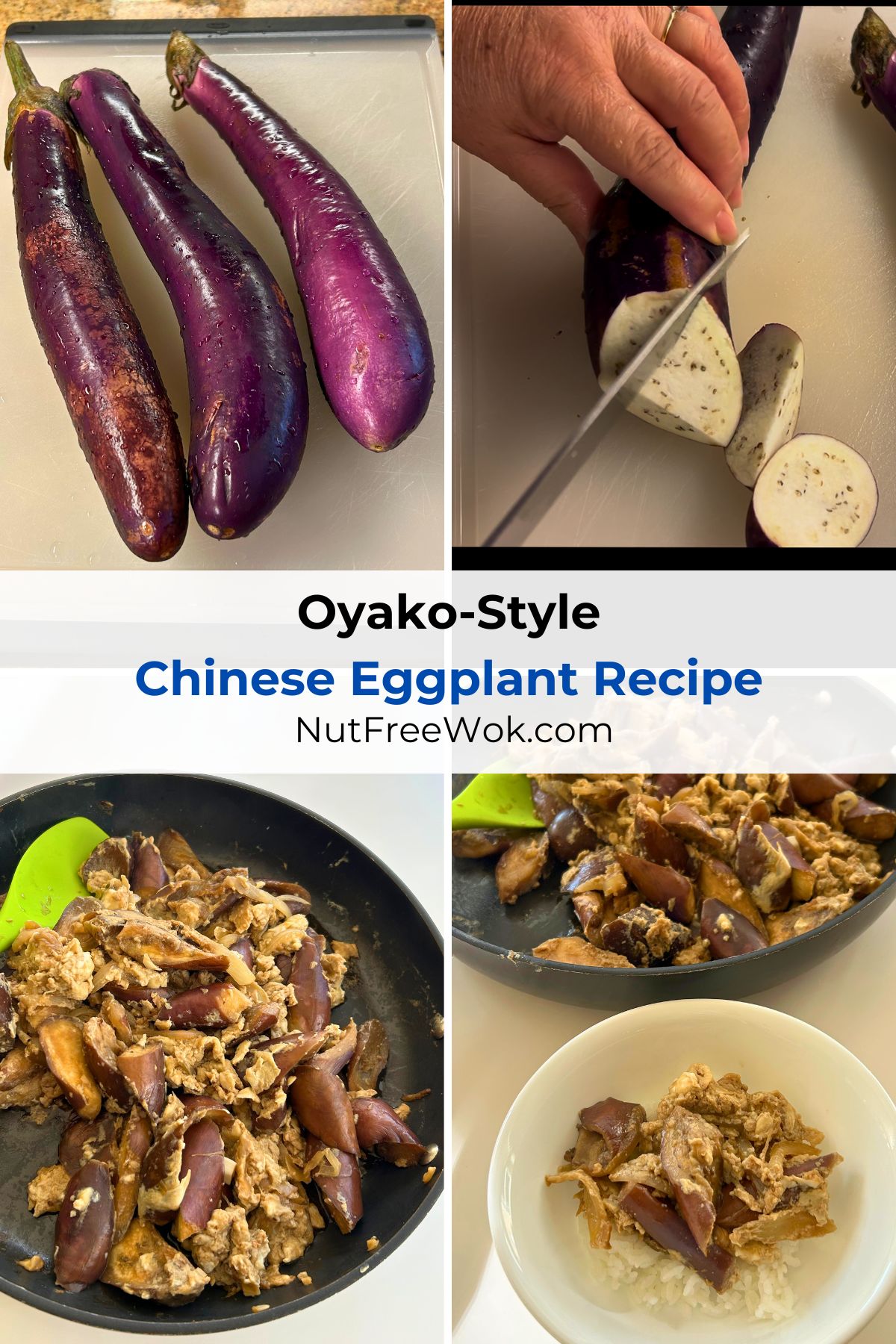
To select fresh Chinese eggplants, check that they feel firm and heavy for their size. The color should be even in color, free of blemishes, with minimal brown spots. The eggplant on the far left (top left photo in the collage below) is a little iffy, I wouldn’t buy that if I picked it out myself.
Chinese eggplant may resemble Japanese eggplant, which is similar in size and shape to Chinese eggplant but have a darker shade of purple. You can use them interchangeably for this recipe.
Prepare the Chinese Eggplant
It’s very easy to prepare Chinese eggplant for cooking. Give them a quick rinse and then cut them for cooking. The eggplant flesh will turn brown after it’s cut, like cut apples, so don’t prep them too early.
I like to roll cut the eggplant diagonally into oblique-shaped pieces so that they cook quickly but also stay somewhat intact. Basically with the first cut, you cut the eggplant diagonally and then roll the eggplant a little bit towards yourself and cut diagonally again.
I like the roll cut because cooked eggplant becomes very soft and the roll cut is a bit thick on one side so the thin part becomes very soft but the eggplant pieces stay intact. It’s also easier to stir.
Allergy Aware Chinese Eggplant & Egg Rice Bowl
This recipe is free of peanuts, tree nuts, milk, fish, and shellfish as written. It’s very easy to make the recipe gluten-free by using tamari sauce instead of soy sauce. If someone is allergic to soy, then substitute with soy-free soy sauce or coconut aminos, or omit it. Similarily, you can also omit sesame oil if allergic.
Traditional oyako-style recipes might use dashi, a broth made from kelp and dried fish, for a savory flavor. If you need to omit soy or sesame, then consider using dashi instead of water.
I liked to use Follow Your Heart’s Vegan Egg product as an egg-free substitute for recipes like this, however they’re discontinued. If you have a liquid egg replacer that isn’t made with your allergens and that can make things like quiche and omelets, that will work as a substitute for eggs in this recipe. Otherwise, I would substitute eggs with drained silken tofu for a similar texture and nutritional benefits.
Chinese Eggplant with Eggs, Oyako-Style Recipe
Ingredients
- 1 pound Chinese eggplant 2 large, or 3 medium sized eggplants
- 1 medium sweet yellow onion
- 2 cloves garlic
- 1 tablespoon olive oil
- 1/2 cup water or dashi or broth
- 1/2 tablespoon soy sauce or 1.5 teaspoon
- 5 large eggs
- 4 cups cooked rice freshly cooked or heated leftover rice
Instructions
- Trim the calyx and any tough portions of the eggplant and discard. Roll cut the eggplant and set aside. Slice the onions lengthwise and chop the garlic and set aside.
- Select a non-stick frying pan with a lid and preheat on medium heat for 4-5 minutes.
- Add the olive oil and swirl to coat. Add the sliced onions, saute until fragrant and slightly softened (4 minutes). Add the chopped garlic and saute until fragrant 1 minute. Add the eggplant and stir fry until the pan is hot again and the eggplant softens slightly (2-3 minutes). Add the water, mirin, and soy sauce, stir, and then cover with a lid. When you see steam come out of the pan, lower the temperature to low-medium and continue cooking for 5 minutes.
- After 5 minutes, stir the eggplant and if there are any eggplant pieces that look very raw (spongy, light in color), make a small well in the center and place the more raw pieces there, add 1-2 tablespoons of water as needed. Cover and cook for 5 more minutes.
- In the meantime, lightly beat 5 eggs in a small bowl, set aside.
- Stir the eggplant. Pour the lightly beatened eggs over the eggplant and cover the pan.
- Continue to cook for 1-2 minutes, the eggs look slighly set. Use a spatula to gently stir the eggplant and eggs until the eggs are cooked through. Remove from heat immediately, serve over freshly cooked rice or reheated leftover rice.
Notes
Nutrition
Related Recipes:
Oyako Donburi (Chicken & Egg Over Rice) Recipe is the inspiration for this eggplant recipe.
If you are interested in cooking with other Asian vegetables, I like Fuzzy Melon (Moa Gua) with Vermicelli Recipe.
People who like eggplant might also like tomato recipes such as Loco Moco, A Hearty Hawaiian Nut-Free Brunch Recipe.
One of my favorite tomato recipes is Pasta with Chicken Sausages, Tomato & Brie Recipe.
Thanks for reading, please help Nut Free Wok!
If you like this post or recipe, please be sure to give a 5 star rating, leave a comment, and share this post! Your support means a lot to me.
Subscribe to Nut Free Wok’s email subscription (be sure to respond to the confirmation email). You will be notified by email next time I publish another post or recipe and I won’t send you spam or share your email address with anyone.
Disclosure/Disclaimer:
I may mention the names of stores and/or brand names of products that I use because readers ask and I share products and sources which I use and think may be helpful to readers, all opinions are my own. Please note that manufacturing practices and ingredients can change at anytime without notice and readers are always responsible for assuring allergen safety before buying or consuming foods. NutFreeWok.com is a participant in the Amazon Services LLC Associates Program, an affiliate advertising program designed to provide a means for sites to earn advertising fees by advertising and linking to Amazon.com. Thank you for reading!